Ballots Without Choice
Why Even Broken Elections Refuse to Die

There is something remarkable about the modern state: no regime, however authoritarian, feels entirely comfortable ruling without staging consent. Even systems as tightly controlled as that of Kim Jong-un maintain the ritual of elections1, complete with near-perfect turnout and unanimous results. No one, internally or externally, is truly convinced. Yet the performance persists.
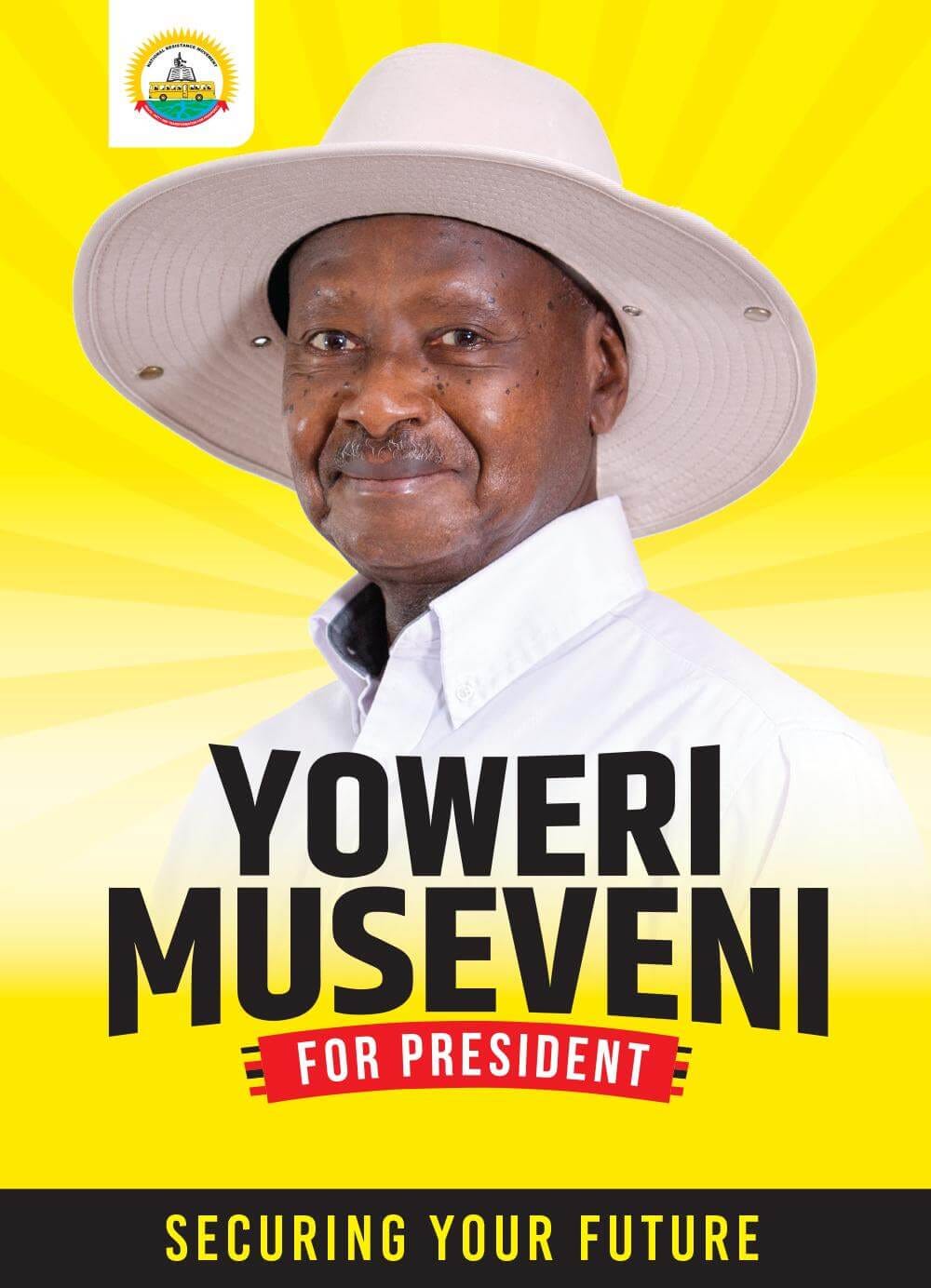
Across Africa, this same pattern repeats with disciplined regularity. Elections are held on schedule. Ballots are printed. Observers are invited. Results are declared. Often, these processes unfold against a backdrop of irregularities so familiar they barely provoke outrage. We know elections are flawed, but why do regimes continue to invest in them at all?
Elections endure because they convert raw power into a recognisable process. In many African states, the memory of coups, insurgencies, and abrupt regime changes is institutional memory. Against this backdrop, elections impose rhythm. They create predictable cycles through which power is renewed or reaffirmed.
Political legitimacy, in this sense, is less about fairness than about form. The repetition of electoral cycles creates what scholars describe as procedural legitimacy, a belief that authority follows rules, however imperfect. Over time, these regularities condition citizens to expect continuity rather than chaos. The ballot, even when compromised, becomes a signal that the system is functioning.
The Psychology of Participation
The true power of elections lies not in institutions, but in the human mind. Voting, even when stripped of real consequence, offers a thin but vital sense of agency. It allows individuals to participate in the construction of outcomes they may privately doubt.
Citizens are often aware of the system’s flaws, but participation provides a way to reconcile with them. The act of voting, standing in line, marking a ballot, and engaging in civic ritual transforms passive subjects into nominal participants. It reduces the psychological burden of powerlessness.
Behavioural research consistently shows that people are more likely to accept outcomes they feel they helped produce2. Elections, even hollow ones, exploit this instinct.
The Manufacture of Consensus
Elections also create a powerful illusion of overwhelming agreement. When regimes announce victories of 80 or 90 percent, the objective is to shape perception rather than persuade citizens of the literal truth.
These moments function as what economists call “common knowledge events.” Everyone knows that everyone else is watching. The result is a subtle but potent form of social pressure. If it appears that the vast majority supports the regime, dissent becomes psychologically isolating.
The political scientist Timur Kuran described this phenomenon as preference falsification3, in which individuals conceal their true beliefs because they assume they are in the minority. Elections amplify this uncertainty.
Managing the Coalition Beneath the State
Beneath the surface, elections serve an entirely different audience, elites. African political systems are rarely centralised monoliths. They are coalitions of regional leaders, business interests, ethnic constituencies, and security networks.
Elections provide a structured moment for renegotiating these alliances. Patterns of turnout, regional margins, and campaign mobilisation all act as signals. They reveal who holds influence, who can deliver votes, and who cannot. In this context, elections are less about choosing leaders than about managing the internal balance of power. They are moments of calibration, opportunities to reward loyalty, discipline underperformance, and reconfigure alliances without overt conflict.
I have previously written an article claiming electoral events serve as a proxy for war here:
Elections as a Proxy for War

Across the African continent, the transformation of warlords and military strongmen into elected politicians is neither rare nor surprising. From Liberia to Uganda, Sudan to the Democratic Republic of Congo, former soldiers and rebel leaders have traded camouflage for suits, shifting from battlefield command to political office. It begs the question: ar…
Participation as Observation
In more tightly controlled environments, elections blur into surveillance. Participation is encouraged, sometimes enforced, and always observed. Voting patterns, down to specific regions and polling stations, offer regimes valuable insight into political sentiment.
This transforms elections into diagnostic tools. They identify pockets of dissent, test the effectiveness of local administrators, and guide the distribution of resources or coercion. The act of voting becomes both a civic duty and a data point.
Africa and the Inheritance of Electoral Form
Africa’s attachment to elections is not purely organic. It is the product of historical layering. Colonial administrative systems introduced bureaucratic governance. Post-independence regimes experimented with one-party states and military rule. The post-Cold War era then reimposed multiparty elections as a condition for legitimacy and access to global capital.
Institutions such as the International Monetary Fund and the World Bank, alongside norms advanced by the African Union, made elections the currency of international acceptance. Once embedded, the system proved remarkably durable. Elections became constitutional fixtures, political rituals, and public expectations. Even regimes that manipulate them cannot easily abandon them without destabilising both domestic and external relationships.
The Ideological Trap of “The People”
Modern regimes, regardless of ideology, are bound by a common constraint: they must claim to rule in the name of “the people.” This idea, now taken for granted, is historically recent. For most of human history, power required no such justification.
From Pericles’ Funeral Oration to the upheavals of the eighteenth century, democracy was an exception, not an aspiration. Yet by the time of Maximilien Robespierre and the French Revolution, the language of popular sovereignty had become unavoidable, even for regimes that wielded it violently45.
Marxism, which influenced several African states, intensified this logic. If the state governs on behalf of the proletariat, it must periodically demonstrate their support. Elections, however managed, become the natural vehicle for that demonstration.
The Future of the Ballot
Elections in Africa persist because they solve multiple problems simultaneously. They create order in systems wary of instability. They offer psychological relief in contexts of limited agency. They coordinate elites, manufacture consensus, and align regimes with global expectations.
If the liberal international order is indeed weakening, as many suggest, the justification for elections may evolve. Regimes may lean more heavily on performance, growth, infrastructure, security, or on cultural and nationalist narratives.
But abandoning elections entirely would be costly. Too much of modern political life is structured around their rhythms. More likely, elections will persist, becoming more sophisticated instruments of control, integrated with digital surveillance, narrative management, and data analytics. The form will remain, even as its function shifts.
Beneath the mechanics of voting lies something more fundamental: a need to believe that power, in some sense, is shared. Elections, however flawed, sustain that belief just enough to hold the system together.
https://edition.cnn.com/2026/03/23/world/video/kim-jong-un-won-election-will-ripley-hnk-vrtc-digvid
https://www.behavioraleconomics.com/resources/mini-encyclopedia-of-be/ikea-effect/#:~:text=While%20the%20endowment%20effect%20suggests,et%20al.%2C%202017).
https://www.hup.harvard.edu/books/9780674707580
https://www.carm.es/edu/pub/20825_2021/13_contenido.html
https://brewminate.com/from-liberty-to-empire-the-french-revolutions-collapse-from-radical-idealism-to-authoritarian-rule/#:~:text=The%20rhetoric%20of%20salvation%20justified%20the%20logic,that%20claimed%20to%20act%20in%20their%20name.
Thank you Brother. In Plain view for everyone to see. If you dare to look.